By GoldFxPro | Updated October 2025
Gold’s unstoppable momentum continues to dominate global headlines, with prices climbing from $4,100 per ounce toward Bank of America’s bold $5,000 target for 2026. What began as a cautious recovery has evolved into one of the strongest rallies in modern history, driven by a mix of economic uncertainty, sticky inflation, and record central bank buying.
According to Reuters, Bank of America (BofA) analysts see gold maintaining its bullish trajectory well into 2026, supported by surging ETF inflows, a softer U.S. dollar, and growing investor conviction that Federal Reserve rate cuts are here to stay.
From $4,100 to $5,000: The Momentum Driving Gold Higher
Gold’s rally is more than numbers — it’s a reflection of trust. As inflation lingers and geopolitical tensions rise, investors worldwide are turning to gold not just as a hedge, but as a symbol of financial strength and independence. Physical demand remains robust, especially in India and China, where retail investors continue to buy at record levels.
The World Gold Council reports that central banks led by China and Turkey are diversifying reserves at the fastest pace in over a decade (World Gold Council Report). With XAU/USD trading comfortably above $4,000, the once-distant $5,000 milestone now appears within reach. As long as global risks persist, the golden era may be just beginning.
Gold Forecasts 2025–2030: From Record Highs to New Ceilings
Looking further ahead, analysts see gold’s long-term climb continuing through 2030, potentially reaching $5,500–$6,000 per ounce if inflation stays elevated and real yields remain low. As Reuters highlights, BofA’s $5,000 forecast reflects sustained central bank accumulation, a weakening dollar, and a global slowdown that keeps investors defensive.
The World Gold Council adds that institutions are steadily increasing their allocations to gold-backed ETFs and physical reserves — marking a structural shift toward inflation-resistant assets. For investors, the message is clear: gold’s real value lies not just in its price, but in its permanence and stability amid financial volatility.
Gold’s Next Frontier: Why the $5,000 Target Could Be Within Reach
The idea of gold hitting $5,000 per ounce once seemed like fantasy — but not anymore. As Bank of America raises its 2026 projection, experts point to lower real yields, a weaker dollar, and resilient demand as key catalysts.
Emotionally, investors are re-embracing gold as a store of trust in an unpredictable financial world. Central banks are buying at record pace, signaling faith in gold’s role as a global reserve asset (World Gold Council). Analysts from Goldman Sachs and Citi warn that once prices break $4,500, a move toward $5,000 could come faster than many expect.
For traders and long-term holders alike, this surge represents more than speculation — it’s a sign of renewed belief in tangible value over paper promises.
Central Banks, ETFs & Gold: The Big Drivers Behind the 2026 Rally
Gold’s rise isn’t only investor-driven — it’s institutional. Central banks across Asia, the Middle East, and Europe have been accumulating gold reserves at a 50-year record pace, according to Reuters. This reflects a strategic shift away from the U.S. dollar and toward real assets.
At the same time, ETF inflows are soaring, signaling growing participation from global investors seeking inflation protection. The World Gold Council reports that ETF holdings are near historic highs, further tightening supply and supporting prices.
Beyond numbers lies emotion — trust and safety. From central bankers to everyday investors, the motivation is the same: preserve wealth in uncertain times. If this momentum continues through 2026, gold could not only set new records but also redefine what “safe haven” means in modern finance.
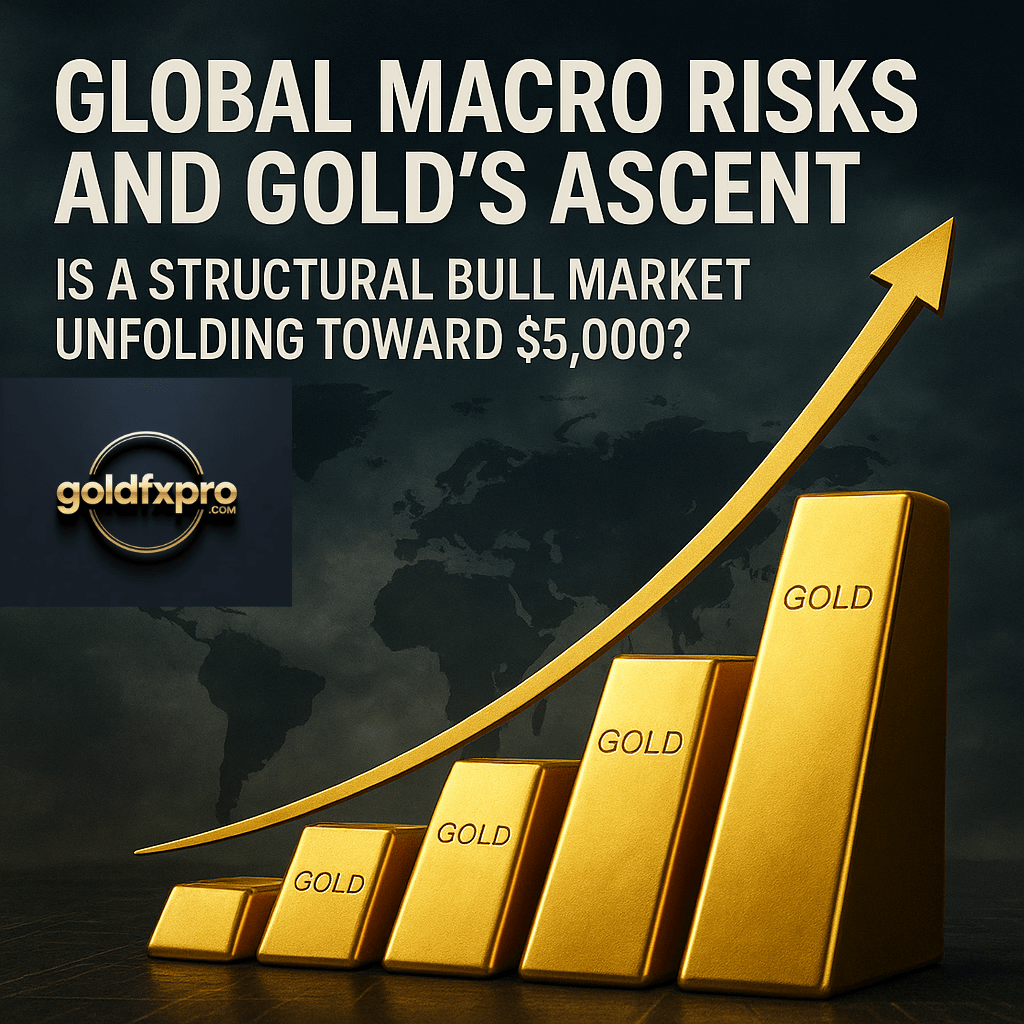
Global Macro Risks and Gold’s Ascent: A Structural Bull Market?
Gold’s sustained rise may be more than a cycle — it could signal the dawn of a structural bull market. Persistent inflation, rising global debt, and geopolitical fragmentation are creating fertile ground for long-term gold appreciation.
Bank of America now expects gold to reach $5,000 by 2026, noting that monetary easing, fiscal expansion, and falling real rates continue to favor precious metals. Meanwhile, the World Gold Council confirms that central bank purchases and ETF inflows remain elevated, reinforcing gold’s growing role as a core portfolio asset.
At a deeper level, this rally speaks to the world’s emotional shift — from uncertainty to resilience. As traditional assets face volatility, gold stands firm as a timeless store of trust. If global risks persist into 2030, this may not just be a rally — it could be a redefinition of gold’s place in the global economy.
Global Macro Risks and Gold’s Ascent: A Structural Bull Market?
For me, gold isn’t just a metal — it’s emotion, conviction, and the heartbeat of global trust. As I watch the world’s economies shift and currencies weaken, I see gold standing tall as the purest reflection of human confidence. The risks are real — slowing growth, rising debt, and geopolitical instability — but so is the resilience of gold. What’s happening now isn’t a short-term rally; it feels like the start of a structural bull market driven by faith, fear, and fundamentals. Central banks are still buying, investors are quietly accumulating, and history seems to be repeating itself — gold always shines brightest when the world feels uncertain.
As an investor, I feel this movement deeply. Every surge in gold’s value isn’t just about price — it’s about protection, patience, and belief in something timeless. The road to $5,000 per ounce no longer feels like a dream; it feels like destiny unfolding before our eyes.
(Read more on Reuters and follow market updates via GoldFxPro.com for live gold analysis and forecasts.)
FAQs: Global Macro Risks and Gold’s Ascent
1. Why are global macro risks pushing gold prices higher?
Rising global debt, geopolitical instability, and slowing economic growth are pushing investors toward safe-haven assets like gold. As trust in fiat currencies weakens, gold becomes a natural choice for wealth preservation and long-term stability.
2. Is gold truly entering a structural bull market?
Yes, many analysts and long-term investors believe this is more than a temporary rally. With consistent central bank buying and long-term inflation fears, gold appears to be entering a structural bull market that could last several years.
3. Can gold reach $5,000 per ounce by 2026?
According to Bank of America’s latest forecast, gold could climb to $5,000/oz by 2026, fueled by persistent inflation, lower real interest rates, and increased institutional demand.
4. How do central banks and ETFs influence the gold rally?
Central banks have been major net buyers of gold, especially in emerging markets. Meanwhile, ETFs continue to attract long-term investors, amplifying demand and strengthening gold’s upward momentum.
5. What is the emotional reason behind investors turning to gold?
Beyond numbers and charts, gold represents trust and protection. In uncertain times, many investors — including myself — see gold not just as an asset, but as a symbol of safety, patience, and belief in real value.