Dallas Fed’s Lorie Logan warns policy must stay cautious despite inflation pressures, urging care in further rate cuts. Gold markets, interest rates, and investor sentiment hang in balance.
Key Points
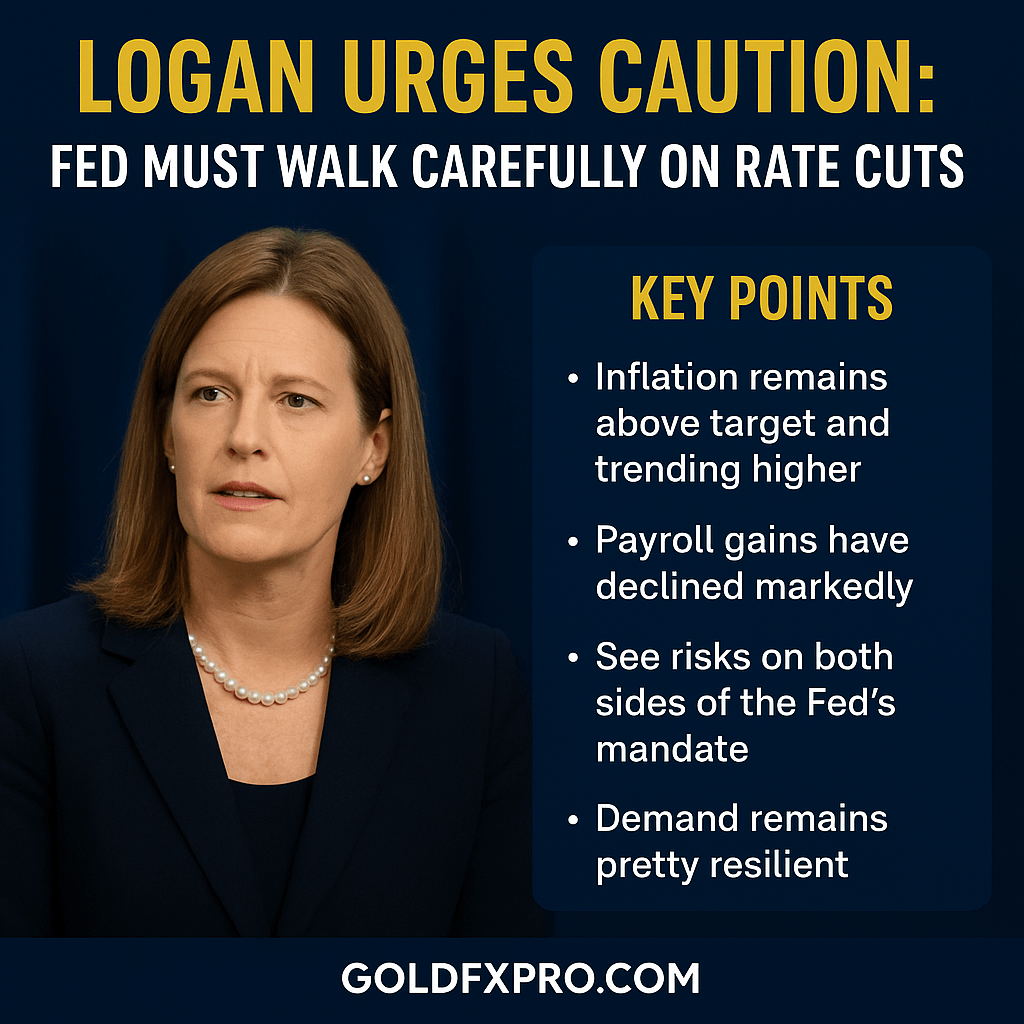
- Dallas Fed President Lorie Logan says the last rate cut was “insurance,” but further easing must be cautious.
- Inflation remains above the Fed’s 2% target, and payroll growth is slowing but still resilient.
- Logan warns cutting too fast could force the Fed to reverse policy, hurting price stability.
- Markets reacted hawkishly: the US Dollar Index gained as yields firmed.
- Gold prices may see pressure from cautious Fed signals, though safe-haven demand remains strong.
Logan’s View: Overview & Context
Lorie Logan, President of the Dallas Federal Reserve, recently stated that while the Fed’s last rate cut served as a buffer against a sudden labor market decline, going forward, the central bank must be “very cautious” about further cuts. Reuters She emphasized that if policy is eased too far and then reversed, it would be detrimental to price stability and Fed credibility. Reuters
Inflation is still running above the Fed’s target and trending upward, Logan added, meaning there’s little room for missteps. Reuters Meanwhile, the labor market remains resilient even if job gains have slowed and Logan sees the risk that easing too much could overstimulate inflation or demand. Reuters
Her remarks reinforce the cautious tone at the Fed, especially as markets push expectations for more aggressive easing. The dollar has responded, strengthening modestly in reaction to her hawkish cues. Reuters
Logan’s Remarks: Why the Fed Stays Cautious
Dallas Fed President Lorie Logan struck a hawkish tone, noting that while the Fed’s latest rate cut was justified as a safeguard against sudden labor weakness, more cuts should be limited. She emphasized the risk of easing too much, which could later require a painful reversal.
Inflation is trending higher, partly due to tariffs, while the labor market remains fairly balanced. Logan said the Fed is “very close to maximum employment” and must see “a little more cooling” before loosening policy further.
Her remarks underscore the Fed’s delicate balancing act: addressing risks to growth without fueling runaway inflation or damaging credibility.
What It Means for Gold, Bonds, and the Dollar
- Gold & Precious Metals: Slower cuts mean gold may lose some momentum, as real yields remain supported. Still, ongoing geopolitical tensions and safe-haven demand could provide a floor.
- Bond Yields & USD: With cautious easing, US Treasury yields may stay steady, strengthening the USD and limiting foreign currency gains.
- Investor Sentiment: Markets expecting faster monetary easing may need to adjust, leading to near-term volatility in equities and commodities.
For now, Logan’s words reinforce that the Fed is not ready to declare victory on inflation, and the path to easier policy will be gradual, data-driven, and cautious.
Market Reaction So Far
Following Logan’s speech, the US Dollar Index (DXY) extended gains by 0.25% on the day, showing markets priced her stance as hawkish. Equity markets paused their rally, while gold prices saw mixed action—supported by safe-haven demand but capped by firmer yields.
Analysts say this cautious stance could slow gold’s near-term upside but doesn’t derail the long-term bullish case for precious metals.
FAQs
Q1: Why are Logan’s comments considered hawkish?
Because she warned against cutting rates too much and too quickly, signaling the Fed prefers a slower approach.
Q2: What does this mean for gold prices?
Gold may face near-term pressure if rate cuts slow, but long-term demand remains supported by geopolitical risks and central bank buying.
Q3: Will the Fed continue cutting rates in 2025?
Yes, but cautiously. Logan stressed future cuts will depend on inflation, jobs, and broader economic conditions.
Q4: How does the Fed’s stance affect the US Dollar?
A more cautious Fed strengthens the USD as yields remain relatively attractive, making the dollar appealing for global investors.
Q5: What should traders watch next?
Key data points like CPI inflation, nonfarm payrolls, and global trade conditions will guide the Fed’s next move.
Q6: Why did Logan mention tariffs?
She highlighted that tariffs have contributed to higher goods inflation, creating an additional risk for inflation expectations.
Disclaimer:
This article is for informational and educational purposes only. It should not be considered investment advice. Always consult a professional financial advisor before making trading or investment decisions.